Free Online French lessons

l’imparfait / Imperfect tense in French

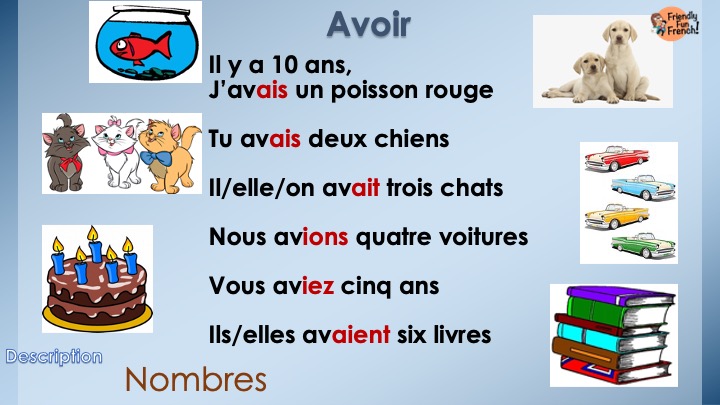
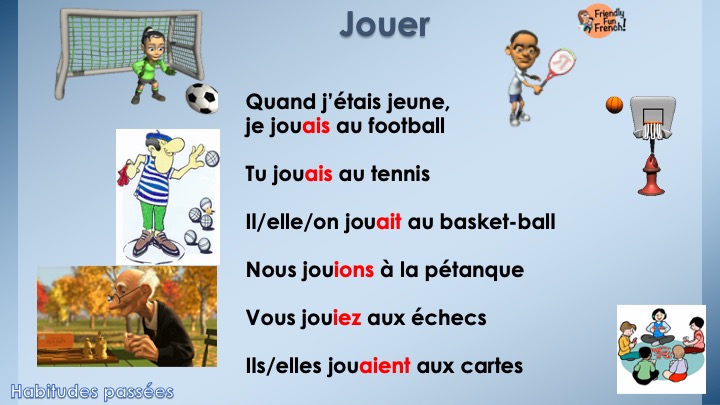
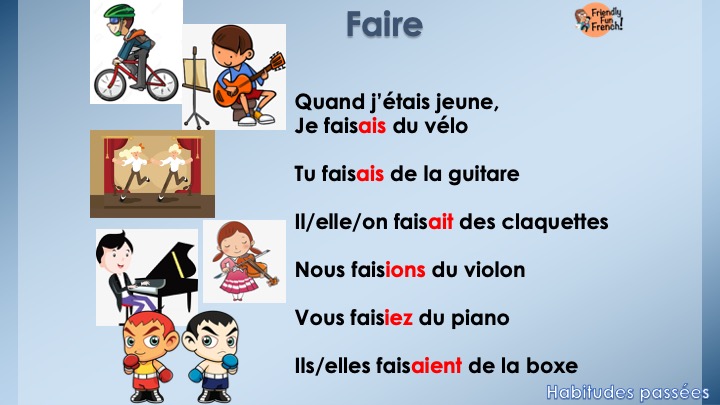
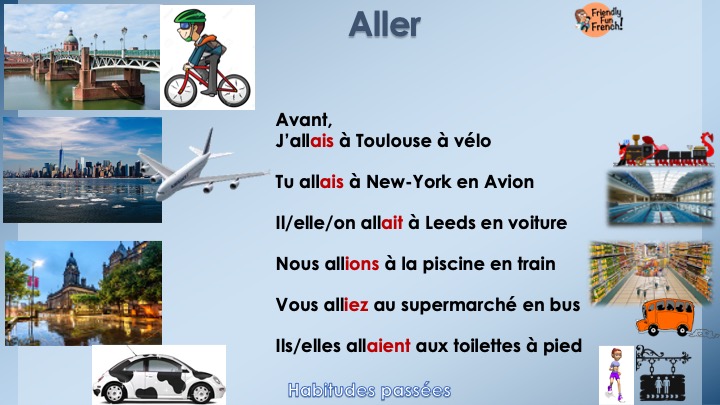
In this lesson you will learn how to conjugate the main French verbs in imperfect.

In French we have 2 tenses that we use a lot when we speak in past : le passé composé et l’imparfait.

L’imparfait called the imperfect tense in English, is a tense to use when you want to describe something in the past or when you want to talk about your emotions in past. For more explanation you can check the other page which explain more deeply when to use the imperfect tense in French.

The verbs conjugated in this lesson are :

être (to be); avoir (to have); jouer (to play); faire (to do / to make); aller (to go); se lever (to get up); dire (to say); prendre (to take); finir (to finish); écrire (to write); apprendre (to learn); dormir (to sleep); voir (to see); boire (to drink); attendre (to wait)

Here is the translation of the words you will find the slide 3 :

surpris (surprised); triste (sad); sympa (friendly), étonné (astonished), énervé (angry), dégoûter (disgusted)

Here is the translation of the sentences you will find in the slide 4 :

il faisait froid = it was cold

il faisait chaud = it was warm

il y avait du vent = it was windy

il pleuvait = it was raining

il neigeait = it was snowing

il y avait du soleil = it was sunny

Free Online French lessons

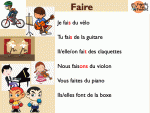
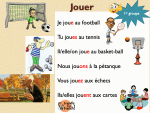
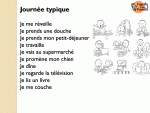
Présent tense / Le présent

You will find on this lesson the most common verbs conjugated in present tense. The 4 most important ones completely irregular are :
être = to be

avoir = to have

aller = to go

faire = to do

You can recognise the regular verbs because the infinitif (it’s the verb when it is not conjugated) always end in -er. Here are some examples :

jouer = to play

aimer = to like

se lever = to get up

You can recognise the irregular verb because the infinitif end in something else than -er. Here are some examples :

Dire = to say

Prendre = to take

Finir = to finish

Connaitre = to know someone or something

Savoir = to know how to do something

Apprendre = to learn

Voir = to see

Venir = to come

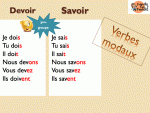
The last 2 slides are the modal verbs :

Pouvoir = to be able to / can

Vouloir = want

Devoir = must / have to

Savoir = to know how to do something

For more practice on the modal verbs, you can click on this link.

Free Online French lessons for beginners

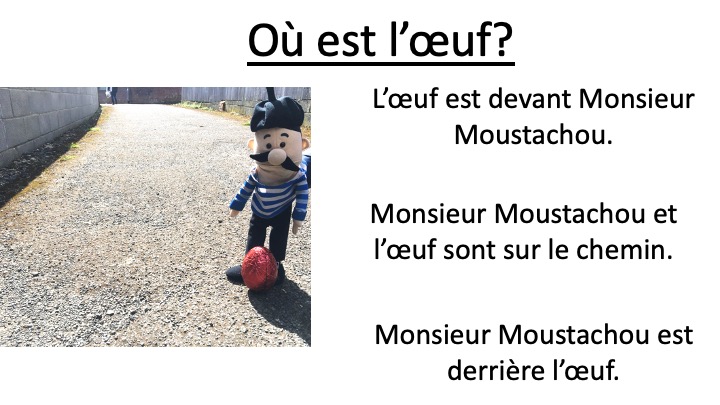
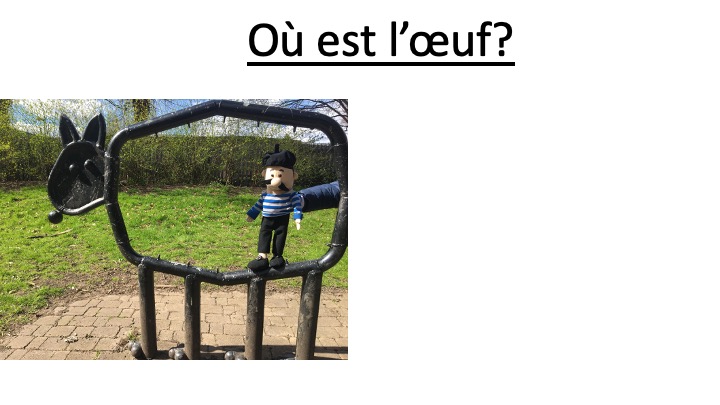
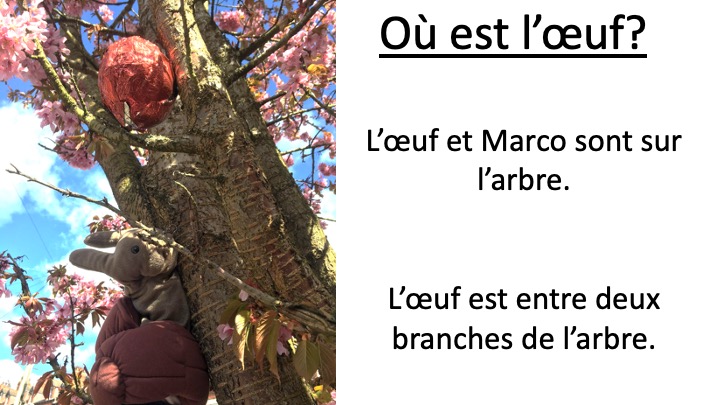
French prepositions and Easter

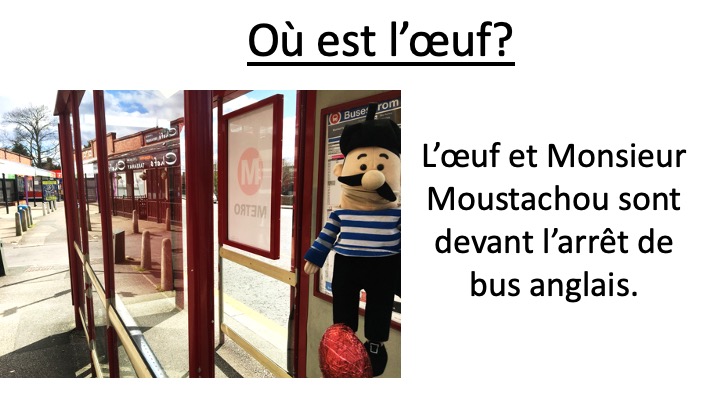
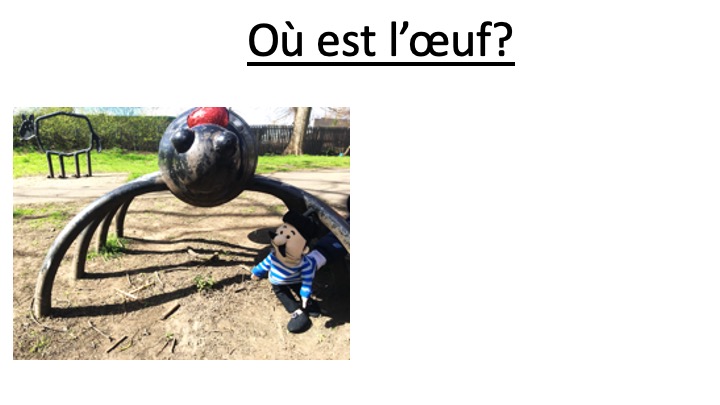
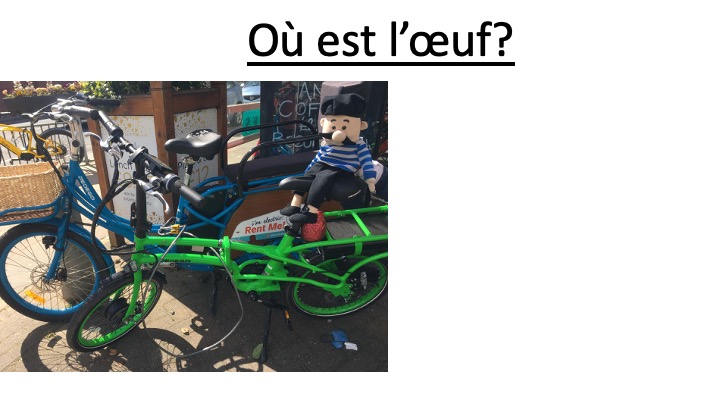
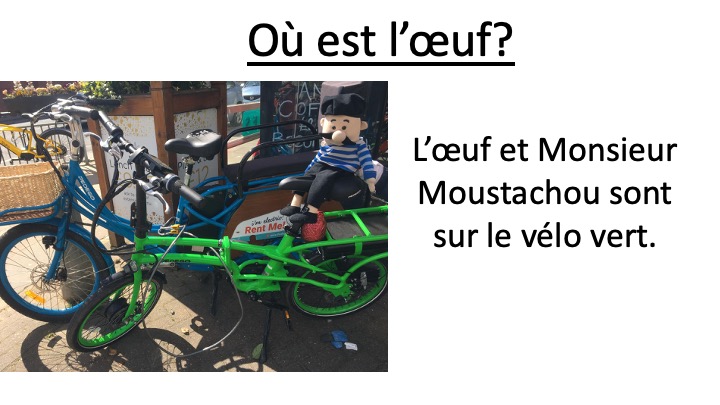
Here is a lesson for you to practice the main French prepositions as :

  • devant : in front of
  • derrière : behind
  • sur : on
  • sous : under
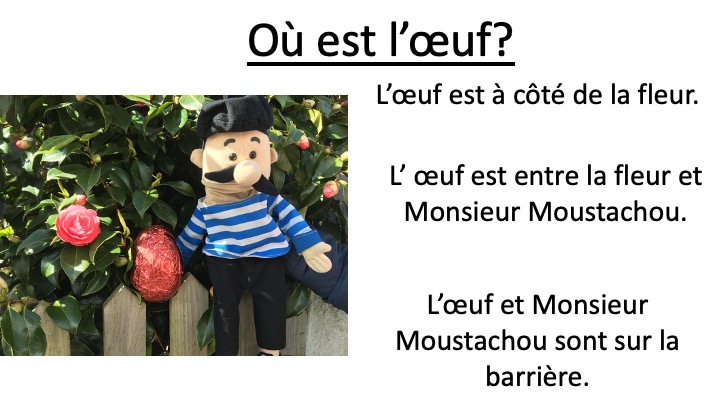
  • à côté de : next to
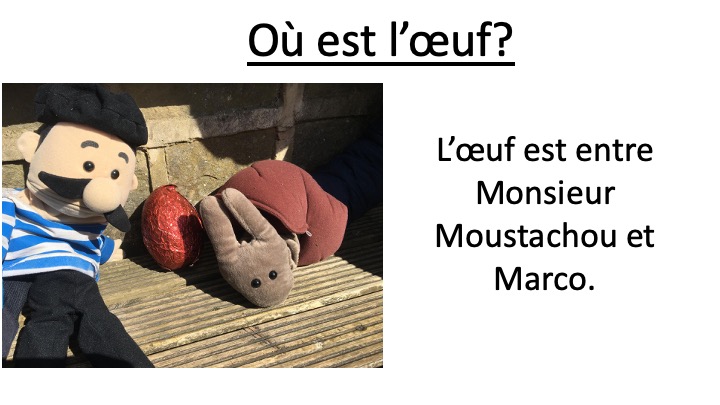
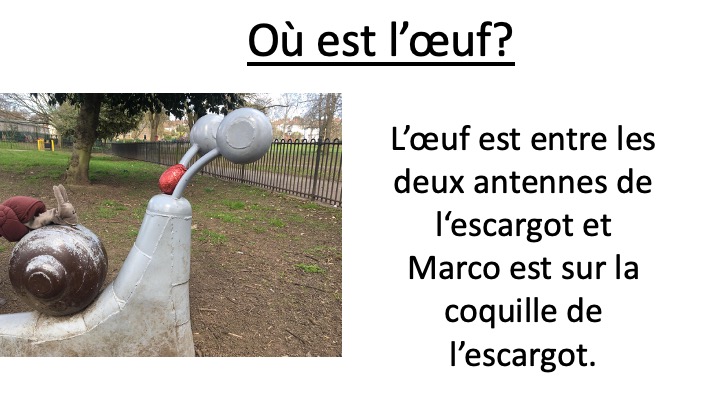
  • entre : between
  • dans : in

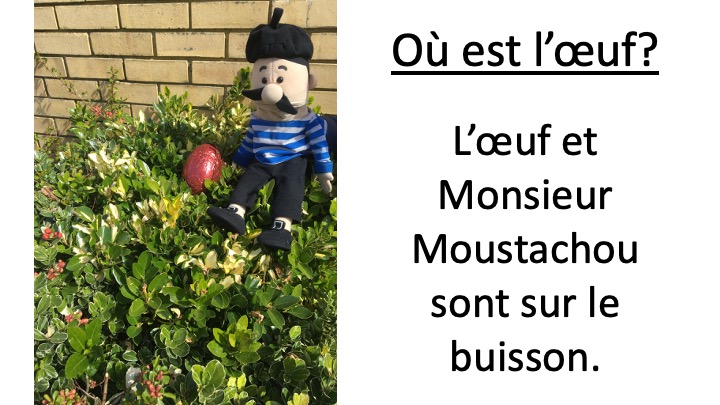
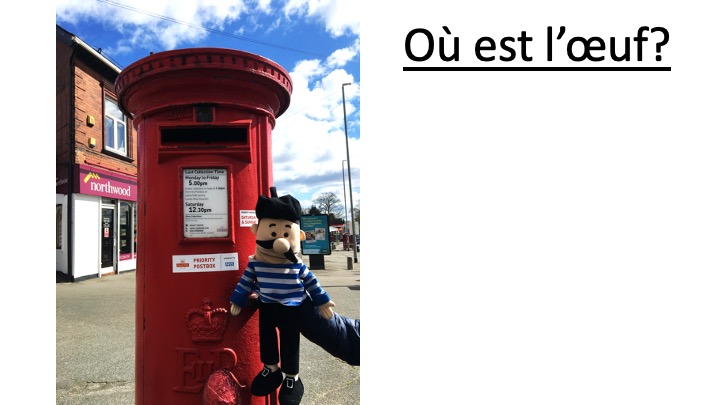
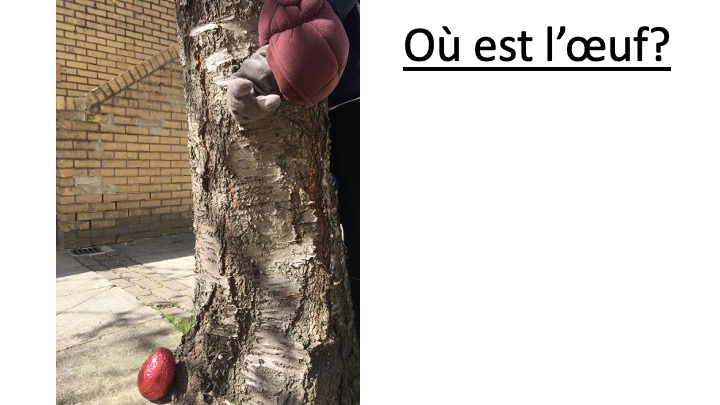
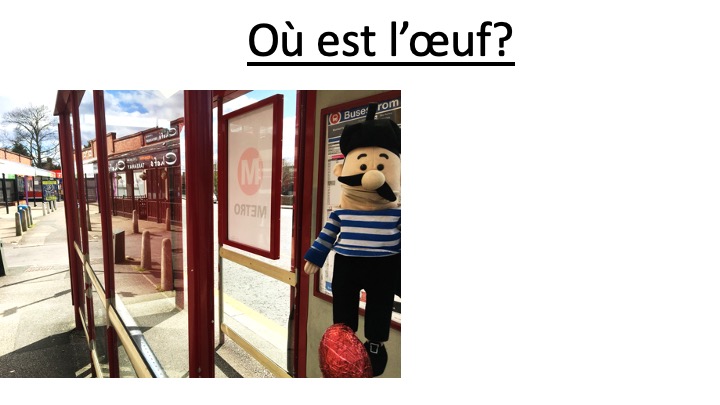
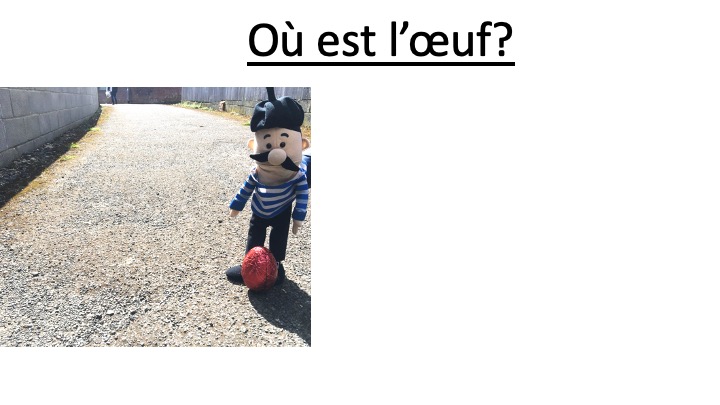
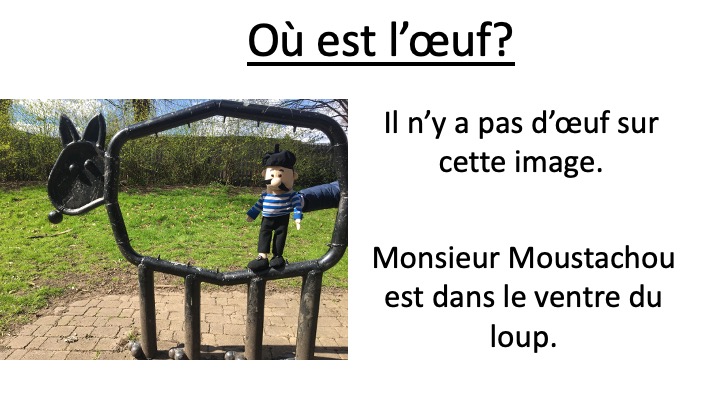
Can you make a sentence for each picture answering the questions : Où est l’oeuf ? (Where is the egg?)

Can you translate the sentences we wrote for each picture ?

In this online French lesson you will also learn the words :

  • Un oeuf : an egg
  • Un buisson : a bush
  • L’école primaire : the primary school
  • Une fleur : a flower
  • Une boîte aux lettres : a letter box
  • Un arbre : a tree
  • Un arrêt de bus : a bus stop
  • Une fourmi : an ant
  • Un vélo : a bike
  • Une antenne : an antena
  • Une coquille : a shell
  • Un escargot : a snail
  • Une barrière : a fence
  • Un chemin : a path
  • Le mur : the wall
  • Le ventre : the belly
  • Une branche : a branch

Have a good lesson 😉