Free Online French lessons

l’imparfait / Imperfect tense in French

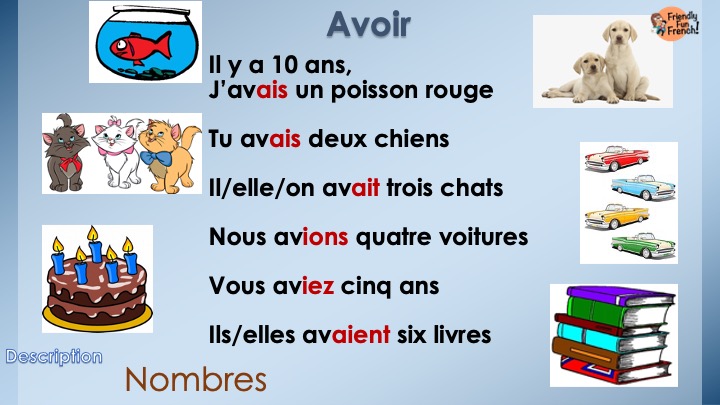
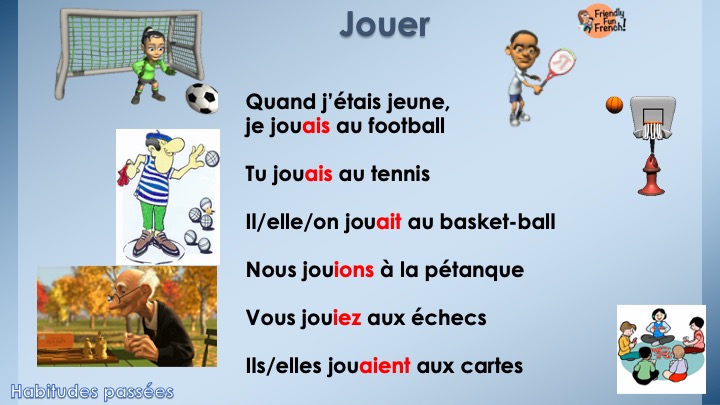
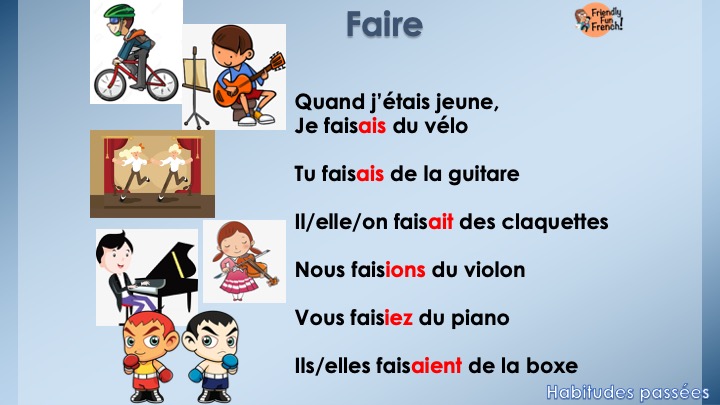
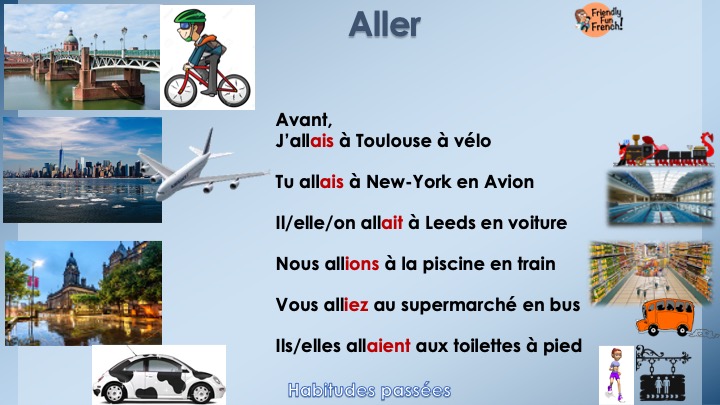
In this lesson you will learn how to conjugate the main French verbs in imperfect.

In French we have 2 tenses that we use a lot when we speak in past : le passé composé et l’imparfait.

L’imparfait called the imperfect tense in English, is a tense to use when you want to describe something in the past or when you want to talk about your emotions in past. For more explanation you can check the other page which explain more deeply when to use the imperfect tense in French.

The verbs conjugated in this lesson are :

être (to be); avoir (to have); jouer (to play); faire (to do / to make); aller (to go); se lever (to get up); dire (to say); prendre (to take); finir (to finish); écrire (to write); apprendre (to learn); dormir (to sleep); voir (to see); boire (to drink); attendre (to wait)

Here is the translation of the words you will find the slide 3 :

surpris (surprised); triste (sad); sympa (friendly), étonné (astonished), énervé (angry), dégoûter (disgusted)

Here is the translation of the sentences you will find in the slide 4 :

il faisait froid = it was cold

il faisait chaud = it was warm

il y avait du vent = it was windy

il pleuvait = it was raining

il neigeait = it was snowing

il y avait du soleil = it was sunny

Free Online French lessons

Présent tense / Le présent

You will find on this lesson the most common verbs conjugated in present tense. The 4 most important ones completely irregular are :

être = to be

avoir = to have

aller = to go

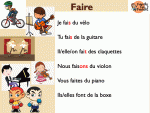
faire = to do

You can recognise the regular verbs because the infinitif (it’s the verb when it is not conjugated) always end in -er. Here are some examples :

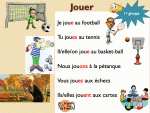
jouer = to play

aimer = to like

se lever = to get up

You can recognise the irregular verb because the infinitif end in something else than -er. Here are some examples :

Dire = to say

Prendre = to take

Finir = to finish

Connaitre = to know someone or something

Savoir = to know how to do something

Apprendre = to learn

Voir = to see

Venir = to come

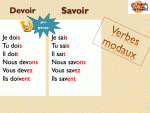
The last 2 slides are the modal verbs :

Pouvoir = to be able to / can

Vouloir = want

Devoir = must / have to

Savoir = to know how to do something

For more practice on the modal verbs, you can click on this link.

Free Online French lessons

One of the French GCSE topics : L’environnement / La santé

Here is an easy way to practice for your French GCSE. This is one of the topics of the French GCSE : Social and Global issue (the environment in French / Healthy and unhealthy living in French)

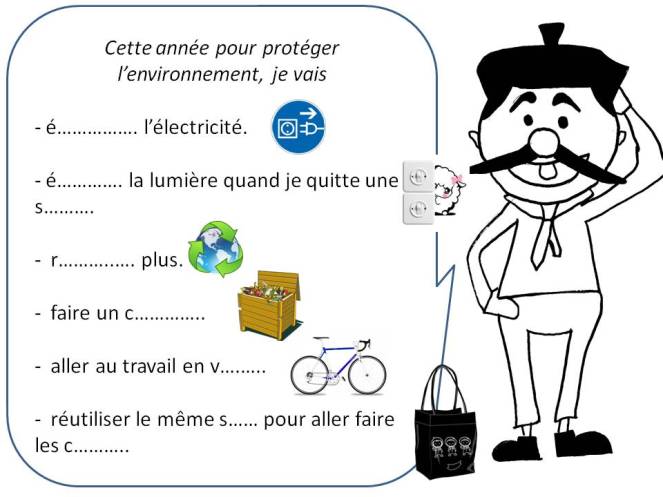
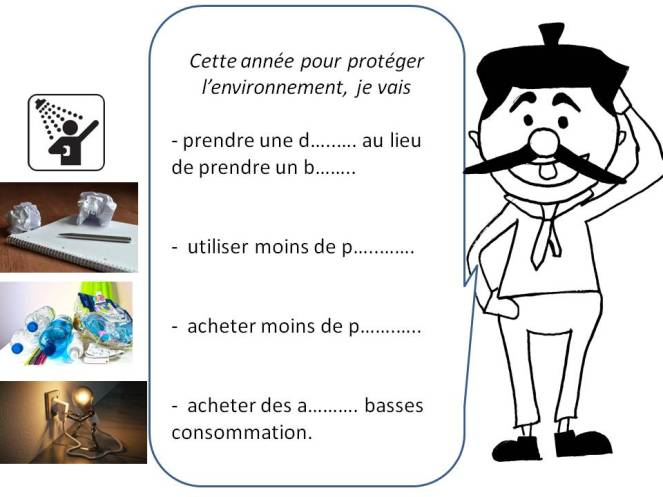
How many gaps can you fill ? Each image helps to guess what is the word missing.

Here are the answers :

Cette année pour protéger l’environnement, je vais :

  • économiser l’électricité
  • éteindre la lumière quand je quitte une salle
  • recycler plus
  • faire un compost
  • aller au travail à vélo
  • réutiliser les mêmes sacs pour faire les courses
  • prendre une douche au lieu de prendre un bain
  • utiliser moins de papier
  • acheter moins de plastique
  • acheter des ampoules basses consommation

Cette année pour être en bonne santé, je vais :

  • manger plus équilibré
  • manger moins de bonbons et plus de légumes
  • prendre les escaliers au lieu de prendre l’ascenseur
  • prendre le temps de manger et de bien mâcher
  • faire plus de sport
  • penser de manière positive
  • rire / rigoler plus
  • arrêter de fumer